









6 Tips to Help You Build Muscle Faster in 2025
Tip #1: Make Sure You’re Pushing Yourself During Your Workouts
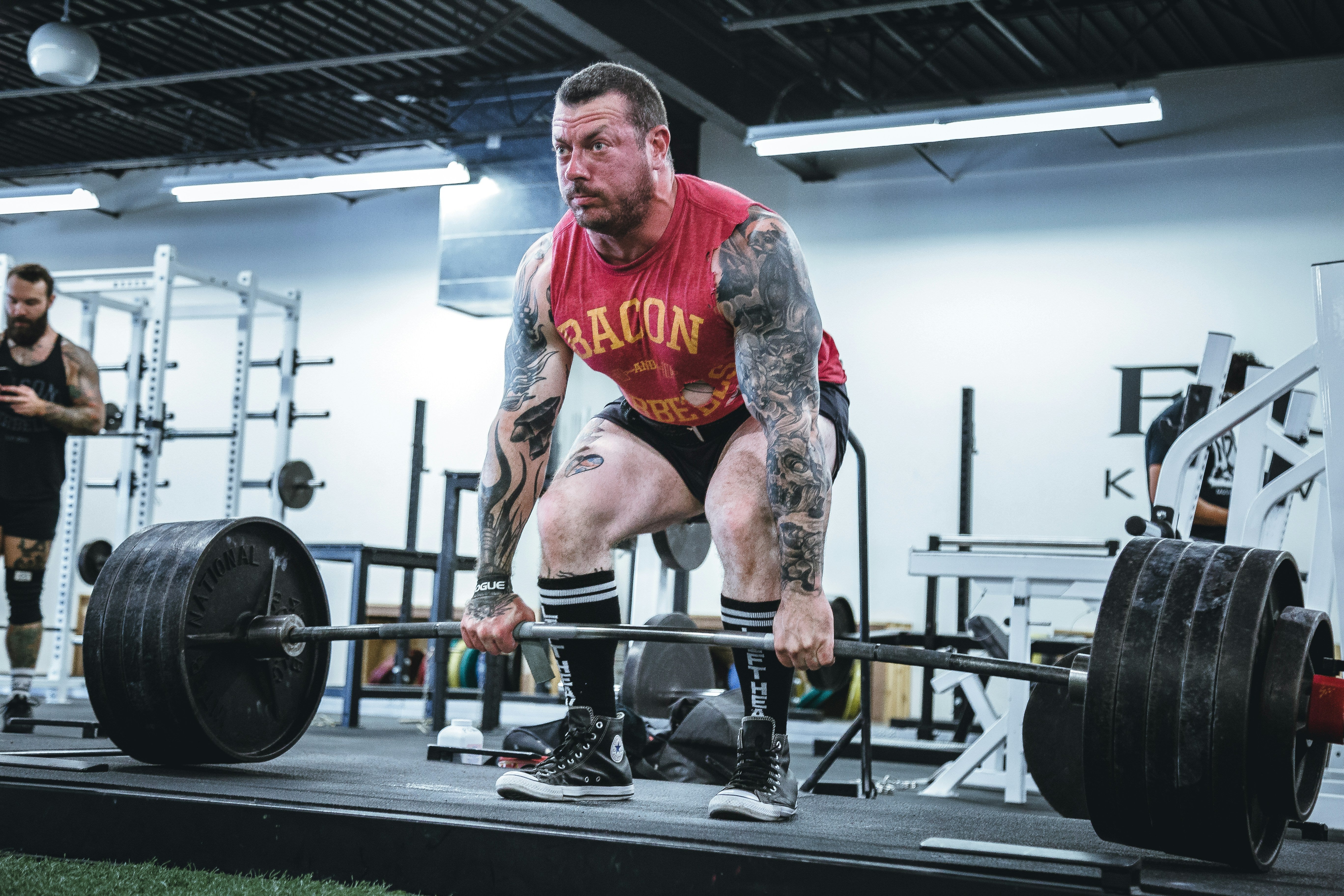
The #1 tip on how to build muscle faster in 2025 definitely involves training harder. Most people have no idea what muscular failure feels like, and if you feel like you’ve not been making satisfactory progress, chances are you don’t either. To remedy this, make sure you’re prioritizing progressive overload (at least if you’re a beginner bodybuilder who hasn’t yet plateaued in any way) or introduce some varying stimuli, which we’ll talk about later. The priority is, however, to always go hard during your working sets, really push yourself, and consistently maintain high levels of effort that put you close to muscular failure, or 0 RIR (reps in reserve). And, if you aren’t already, track your workouts! Diligently logging your exercise performance can help you assess your progress on a workout-to-workout basis and ensure you’re always pushing yourself almost to the limit. Use wearable technology and mobile apps to track and optimize your workouts based on real-time data.Tip #2: Keep Nutrition in Check
The simple truth is that you’re not going to gain muscle density if your body isn’t getting enough essential nutrients for that purpose. To support muscle growth, your body needs to remain in a state of caloric surplus with a sufficient amount of protein intake. What’s sufficient? Around a gram of protein per pound of body weight should be enough for most individuals. Combine that with 300–500 calories above maintenance and regular resistance training, and you’re set. There’s no need to overcomplicate this; it’s not rocket science. Of course, other components like hydration and supplementation also play a part, but it’s generally not necessary to start looking at supplements before sorting out your food intake. Consider leveraging AI-based diet plans to tailor your nutrition more precisely for muscle growth.Tip #3: Don’t Forget about Recovery!
Though this certainly falls under the beginner category of tips, even advanced lifters often tend to neglect or forget about it. Sleep is when your muscles rebuild. It doesn’t happen in the gym—that’s where the muscles get damaged—or randomly throughout the day. Prioritizing getting 7 or 8 hours of sleep per day is an absolutely crucial building block for muscle growth. Utilize new wearables that help track sleep stages and recovery status to ensure optimal muscle repair.
Tip #4: Accentuate the Eccentric
Moving into slightly more intermediate territory, let’s tackle some subjects related to exercise technique, starting with the eccentric portion of any given exercise. If you don’t know, virtually every movement we do in the gym can be split into two parts:- The concentric portion, which is where you actively squeeze the muscle to go from a lengthened to a shortened position. Think the “curl” part of a bicep curl, the thrusting part of the hip thrust, or the latter half of the squat where you stand up with the bar.
- The eccentric portion, which is the opposite part where your muscle goes from shortened to lengthened.
Tip #5: Introduce Varying Stimuli
Sometimes, when you hit a plateau, introducing new ways to train might be a solid idea. This exposes your muscles to different types of stress, potentially kickstarting new growth. Here are several proven techniques to add to your arsenal:- Drop sets: After reaching failure on your working weight, drop the weight by 20–30% and aim to hit at least half the number of reps, preferably going to failure again. Repeat several times until you can’t keep it going anymore. Note that this makes the most sense with machine-based exercises where switching the weight is as simple as inserting the pin higher up the stack.
- Myoreps: In a way, they’re similar to drop sets, except you don’t go to failure, and you don’t change the weight. After performing 8–12 reps of an exercise, rest for around 15 seconds, then pick the weight back up again and perform an additional 3–5 reps.
- Top sets & back-off sets: Mostly reserved for compound lifts, this technique involves loading the bar with slightly more weight than during your normal working sets (so, say 95% of your 1 rep max rather than 80–85%), doing 1 to 2 reps at most, then reducing the weight to the normal range or even slightly below for several more sets after that. Doing things this way primes your nervous system better for your usual work and gets you accustomed to heavier weight on the bar.
Tip #6: Focus on Compounds, But Accessorize Smartly
While compound movements should definitely form the cornerstone of your training routine, adding isolation work to target areas and muscle groups that you feel are lagging behind can be a good idea to help them catch up. For example, if you feel like it’s your triceps or your forearms that give out first during bench pressing, adding in a few sets of tricep-focused exercises or some sort of forearm curl can help you address those weak points, which should translate to a bigger bench with time.Tips to Help You Build Muscle Faster in 2025 - The Takeaway
How to build muscle faster in 2025? By incorporating these 6 tips, you should be able to overcome the majority of roadblocks most lifters encounter in their first couple of years of regular training. Remember that consistency with the fundamentals—pushing yourself, eating well, and recovering properly—will always trump fancy techniques, but mastering the details can help you maximize your results. You may also read: L-Citrulline VS Citrulline Malate: Which One Is the Best?How can I build muscle faster?
To build muscle faster, focus on training harder with progressive overload, ensure proper nutrition with a caloric surplus and sufficient protein intake, and prioritize recovery with enough sleep.
What is progressive overload, and why is it important for muscle growth?
Progressive overload means gradually increasing the weight or intensity of your workouts. It's crucial for continuous muscle growth because it forces your muscles to adapt to new levels of stress.
How does nutrition impact muscle building?
Proper nutrition, especially eating in a caloric surplus with about 1 gram of protein per pound of body weight, provides the essential nutrients your body needs to repair and grow muscles after training.
What are some advanced techniques to break through muscle-building plateaus?
Techniques like drop sets, myoreps, and top sets/back-off sets introduce varying stimuli to challenge your muscles differently, helping you overcome training plateaus and stimulating new growth.
Read more

Need some beginner bodybuilding tips? You’ve come to the right place! Whether you have multiple attempts behind you or are looking into bodybuilding for the first time in your life, you’ll find our...
L-citrulline and citrulline malate are both dietary supplements commonly found in pre-workout mixes. Their chemical composition is quite similar, as are their effects. The difference is that L-citr...