







How Often Should You Work Out?
What is the optimal workout frequency? Is it twice a week? Three times? Six times? Well, with so many variables and factors that influence your choices, there’s really not a great uniform answer to give here. However, there are some general pointers that should help you determine the optimal amount of weekly training sessions. These relate to your health, fitness goals, level of advancement, how committed you are to training, and a couple of others. Today, we’ll discuss how many workouts per week you should be doing depending on all of those. Keep reading, and you’ll walk away with a solid idea!
Why There Is No Single Optimal Workout Frequency
That’s because it all depends on two primary factors:
- What your goals are
- What your schedule allows you to do sustainably
Example: if you’re working two jobs, have a family, and still want to squeeze in 5 workouts a week, that’s virtually impossible to do so without causing major disruption in your life.
To reiterate, there is no “perfect” workout frequency. On top of the limitations listed above, understand that what works for a beginner trying to lose weight and stay healthy is going to be wildly differetn from what a competitive bodybuilder or powerlifter needs. On top of your goals and availability in your schedule, factors like your recovery capacity and even your stress levels outside the gym matter a lot more than you might think.
Plus, training hard is only part of the equation. Training smart means matching your frequency to your ability to recover. Rest is incredibly important for muscle growth, and while six sessions a week looks cool on paper, if your sleep, nutrition, and stress management are far from under control, you’re just digging yourself into a fatigue hole. No amount of pre-workout or supplementation can provide a shovel, either.

Defining Your Expectations: Factors that Determine How Many Workouts Per Week to Do
Before we proceed with procuring imaginary numbers, you need to be honest about what you actually want out of training. Here’s how to match your goal with the right weekly training frequency.
I Want Most of the General Health Benefits
If your goal is to stay mobile, lose weight (mostly by lowering your body fat percentage but also by offsetting that with some modest muscle growth), and keep your heart happy, you don’t need to live in the gym. Far from it.
Even going by the standard WHO recommendations, which is just 75–150 minutes of intense exercise per week, you can reap enormous benefits that improve your overall health. What would those be? Well, the list is rather impressive:
- Better cholesterol profile
- Improved blood pressure regulation
- Reduced risk of heart disease and stroke
- Better insulin sensitivity & sugar control
- Improved metabolism
- Better cortisol regulation and hormonal profiles in both men & women
- More mobility, strength, stamina
- Reduced anxiety and stress
- Better cognitive function
- Improved, more restorative sleep
- Lower all-cause mortality
Believe it or not, this doesn’t even begin to cover it. For most people who do not do any exercise at all, doing the most basic amount of exercise, even if only 1–2 times a week for 60–90 minutes, is essentially life-changing. If that’s got you wanting to get started, we have another article where we cover tips for complete beginners:
I Want to Become Fit
If you want to improve your endurance, conditioning, and functional strength, you’re going to need to take a slightly different approach.
First, follow a structured program. Guesswork and fumbling around will either get you nowhere or overall slow your progress down considerably.
In your case, training around 2 to 3 times per week should be sufficient if you do so with the right intent and intensity. Bear in mind, though, that you can’t outtrain a bad diet, so if you’re serious about it, you’ll also want to keep your nutrition and sleep in check, too.
I Want to Be Noticeably Stronger and Bigger
Looking to optimize training for muscle growth and strength? This is where progressive overload meets consistency.
- Here, anything between 3–5 sessions per week should do you good, depending on your workout split.
- Focus on hypertrophy work and prioritizing heavy compound lifts with some isolation work sprinkled in.
- Recovery becomes absolutely critical to not hamper progress.
I Want to Go Full Beast Mode
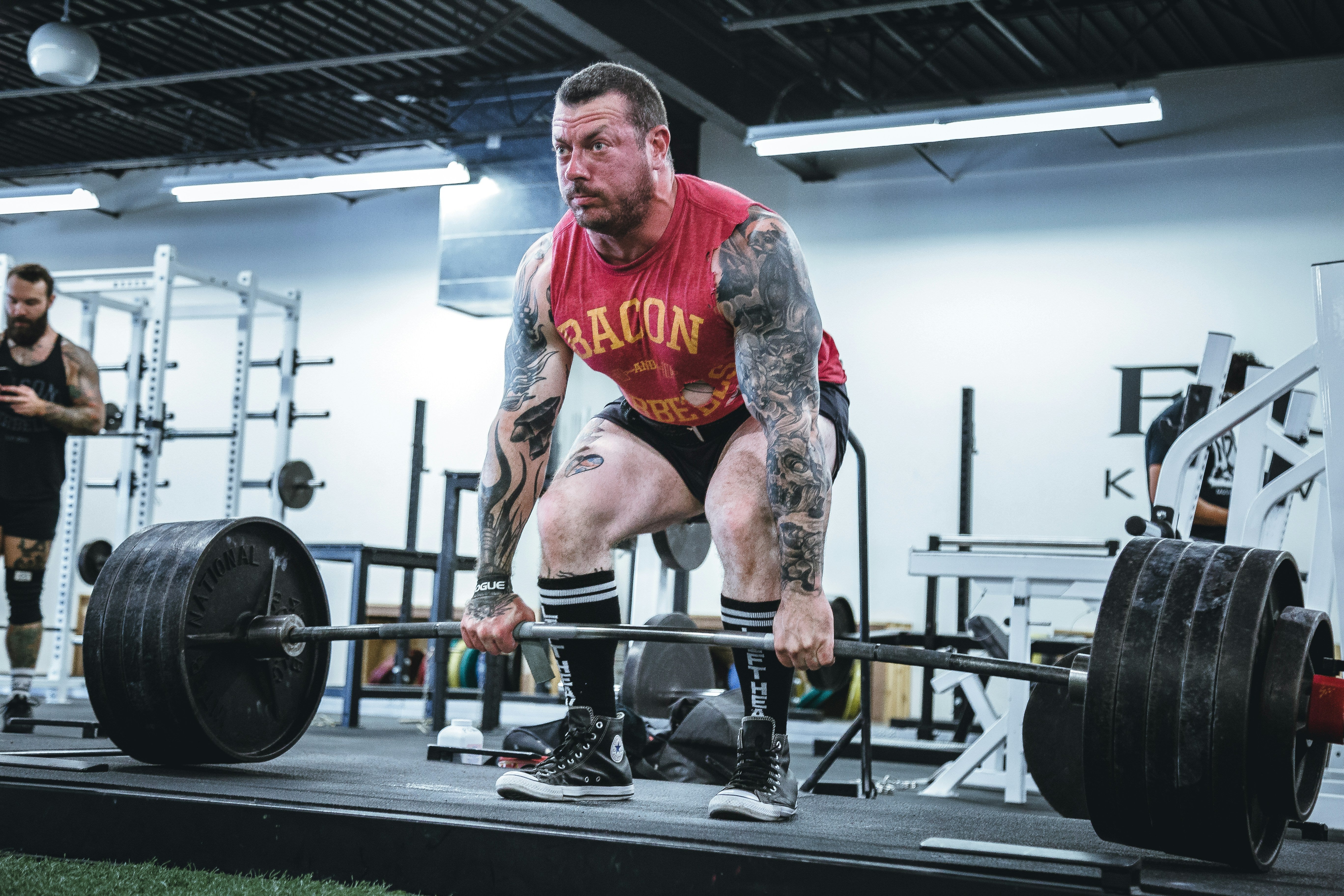
If you want elite performance, competition-level strength, and building muscle even faster, you better get ready to dedicate some serious time. And not just inside the gym, mind you. That’s where you spend 1 to 2 hours on your training days. What becomes much more important is what you do throughout the other 23 hours you’re not training.
In this case, working out 5 days a week is common, but some people take no rest days at all. We don’t necessarily recommend it as it could accumulate too much systemic fatigue and, over time, needlessly increase your risk of injury.
Focus on periodized programming, advanced lifts, and supporting your recovery as much as you can. Nutrition has to be locked in, too, and so does your rest. At this level, training becomes a lifestyle. Your nervous system will let you know very quickly if you’re pushing too hard without backing it up with enough recovery.

What Else Influences How Often You Should Work Out?
Beyond your goals and schedule, there are a few extra levers you can pull to help your training:
Sleep Quality
Absolutely paramount, not just for training, but overall quality of life. No deep sleep means no proper recovery.
Nutrition
If your diet is garbage or you’re chronically under-eating, your body won’t recover fast enough to handle frequent sessions.
Stress
Work burnout, emotional stress, and mental fatigue all drain your CNS just as much as training does. If you’re mentally fried, scale back your efforts temporarily to let yourself breathe.
Training Age
Beginners can make serious gains off just 3 days a week. Advanced lifters often need more volume and frequency to break through plateaus.
Program Structure
Some training splits require less frequency to be effective. Others program more days to hit the same weekly volume for each prioritized muscle group. The split you’re on will definitely play a major part in how many days per week you find yourself in the gym. If you feel like you’re doing too much (or too little), it might be worth switching up your regimen and seeing if that makes any difference for you. Ultimately, your training should fit your expectations, not the other way around.
The Takeaway
There’s no magic, optimal workout frequency that works for everyone, but there is a sweet spot for you. Find it by basing it on your schedule, goals, and work capacity. Knowing what you’re training for and keeping things realistic and sustainable is the only answer to “how many times should I train per week” while avoiding gym burnout and nervous system overload.
Read also: Slow Reps vs. Fast Reps: Does Lifting Speed Matter?
How often should I work out if my goal is general health and fitness?
For general health, the World Health Organization recommends 75–150 minutes of intense exercise per week. This can be achieved with 1-2 workouts per week lasting 60–90 minutes to improve mobility, strength, and reduce the risk of heart disease.
What if I want to improve my strength and endurance?
If your goal is to improve endurance and conditioning, training 2–3 times per week is ideal. Structured programs with proper intensity, along with balanced nutrition and sleep, will help you progress.
How many workouts should I do to gain noticeable muscle and strength?
To build muscle and strength, aim for 3–5 sessions per week. Focus on progressive overload, prioritizing compound lifts and hypertrophy work. Proper recovery is crucial to avoid hampering muscle growth.
What other factors should influence how often I train?
Factors like sleep quality, nutrition, stress, and training experience all impact how often you should train. Beginners may benefit from 3 sessions a week, while advanced lifters may require more frequency. Pay attention to recovery and adjust your training split if needed to avoid burnout.
Read more
You know that some ingredients in the pre-workout you take before each session, like caffeine or beta-alanine, give you an energy kick once they enter the bloodstream. But are there any extra effec...
Does rep speed affect muscle growth in any significant way? As it happens, yes, it does. There’s a ton that goes on in your muscles that happens in the background rather than just the physical aspe...