








Slow Reps vs. Fast Reps: Does Lifting Speed Matter?
Does rep speed affect muscle growth in any significant way? As it happens, yes, it does. There’s a ton that goes on in your muscles that happens in the background rather than just the physical aspect of stretching and contracting the muscle tissue itself, and speed plays a major role in moderating those factors. In this article, we’ll show you how to maximize your gains by playing around with slow vs. fast reps in strength training, why it’s worth exploring different kinds of stress, and give you some practical recommendations that could help you overcome plateaus.
The Science Behind Lifting Speed
As explained in the intro, rep speed does affect muscle growth quite significantly, but what are the detailed scientific explanations underpinning this statement? Let’s break it down.
When you lift weights, you’re not just moving iron from point A to point B. Rather, what ends up happening is a complex chain of physiological responses that can vary dramatically based on a number of factors.
- Your technique and how strictly you perform each rep,
- The weight you use for the exercise,
- And, of course, the speed of the reps themselves.
At the cellular level, your muscles contain different fiber types: slow-twitch, or Type I fibers, and fast-twitch (Type II) fibers. Both types respond differently to training stimuli.

Muscle Fiber Recruitment
- Fast-twitch fibers generate more force but fatigue quickly
- Slow-twitch fibers produce less force but have greater endurance
As you might imagine, the speed of your reps selectively targets these different fiber types.
Time Under Tension
In your pursuit of maximizing hypertrophy and gains, you may have encountered the term “time under tension,” sometimes repeated with an almost mantra-like devotion. Indeed, TUT is a critical concept in resistance training and refers to the total duration your muscles are actively working (or resisting) during a set.
Slower reps naturally increase TUT, as the muscle has to struggle to move the weight against the force of gravity for longer while becoming progressively more exhausted. This creates metabolic stress within the muscle, causing it to accumulate metabolites. In turn, this leads to a powerful anabolic stimulus. The eccentric phase is especially important for this, in particular because during the lowering phase, your muscles can actually handle more weight than during the squeezing/concentric phase.
Fast Reps in Strength Training: Developing Explosive Power
However, this is where we diverge away from the dogmatic approach to time under tension. Training with faster repetitions can also offer distinct benefits that slower reps cannot provide. When you move weights explosively, you develop your muscles’ ability to produce force rapidly, which is crucial for both athletic performance and even functional strength in daily life.
Neural Adaptations
Fast reps primarily train your nervous system to fire both types of muscle fibers more efficiently and synchronously. However, this effect starts taking place before any visible hypertrophy and explains why beginners can get stronger without getting bigger at the start of their fitness journey.
Power Development
Now, we come to the best part. As you probably imagine, moving a heavy object faster requires more energy and strength than doing it slowly. Practicing this makes your lifts (and your body) significantly more athletic – it’s exactly why Olympic weightlifters look so elegant and impressive as they perform their Herculean feats of strength. Even though they mostly train with submaximal weights, they develop impressive strength and muscle mass because explosive movements create enormous mechanical tension throughout the entire kinetic chain. Training the body’s ability to generate force rapidly is an often overlooked aspect of training that you should consider adding to your routine.
Slow Reps: Letting Gravity Wreck Your Muscles for You
While explosive training builds power, slow-tempo work creates a different but equally valuable stimulus. By slowing down, particularly during the eccentric, you essentially let gravity do its destructive best against your resisting muscles.
Enhanced Muscle Damage
By emphasizing control during the lowering portion of the lift, you significantly increase the mechanical tension placed upon your muscles, thus increasing the microtears in the fibers. To leverage this effect to the fullest, it’s recommended to elongate the eccentric phase of each rep to 3–5 seconds.
Mind-Muscle Connection
Slow reps also dramatically improve the mind-muscle connection. In practice, being able to more consciously engage specific muscles to do the work rather than relying on momentum or shoddy technique leads to a greater hypertrophic potential in the long run.

Practical Considerations – How to Actually Apply This Knowledge
So, how do we put all of this together? Rather than seeing fast and slow training as competing methodologies that are exclusive with each other, think of them as complementary tools in your training arsenal. Combining both approaches will likely lead to the most gains possible. Here’s how to implement both effectively:
- For compound movements, use primarily moderate tempos. These exercises already overload so many muscle groups simultaneously that messing with the tempo and going excessively fast or slow could increase the risk of injury. If you’d like to experiment, cut your working weight down considerably.
- For isolation exercises, slower tempos can enhance your mind-muscle connection and enhanced targeted development. There’s generally no downside to slowing down the eccentric in isolation work, so go all out and reap all the gains you can! Slow and deliberate wins the race.
If you want to try a programming approach to this, then you’ve got two options:
- You could try introducing periodization into your training and dedicating 3–4 week blocks to alternate between prioritizing different lifting speeds; or
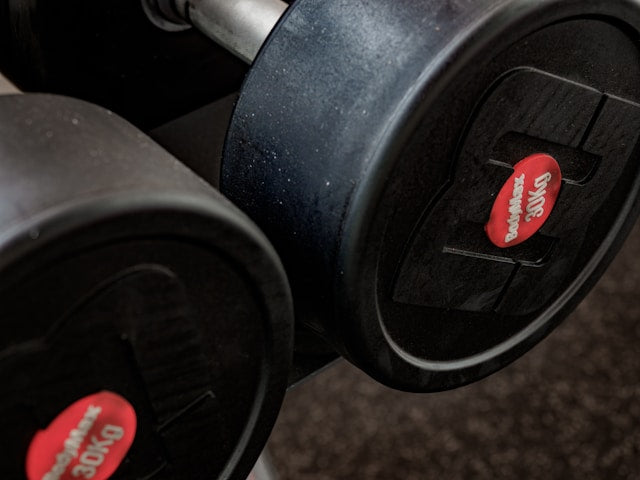
- Instead of changing your entire approach for weeks at a time, simply perform hybrid sets that alternate between fast and slow tempos. Note that doing this will likely require only performing even set numbers and managing intra-set fatigue by lowering the weight during the exercise (like getting a pair of lighter dumbbells for curls when your muscles become too exhausted).
The Takeaway
So, once again, does rep speed affect muscle growth? It absolutely does. Applying different tempos recruits different muscle fibers, which can trigger hypertrophy much more strongly than sticking to a moderate tempo at all times. If you want your muscles to blow up in size, definitely take the tips and knowledge we shared here today to heart – these techniques are really simple, but they could be crucial for overcoming plateaus and increasing your overall lean muscle mass.
Read also: How Pre-Workouts Impact the Nervous System?
How does rep speed impact muscle growth?
Rep speed significantly affects muscle growth by recruiting different muscle fibers. Slow reps increase time under tension (TUT), which promotes hypertrophy, while fast reps develop explosive power and strength.
What benefits do slow reps offer that fast reps don't?
Slow reps, especially during the eccentric phase, increase muscle damage and mechanical tension, which leads to more muscle microtears and, over time, muscle growth. They also enhance the mind-muscle connection for better targeted development.
Are fast reps beneficial for strength training?
Yes, fast reps are great for developing explosive power and improving your ability to generate force quickly. They train the nervous system to fire muscle fibers more efficiently and enhance overall athletic performance.
How can I combine slow and fast reps in my workout routine?
To maximize gains, use moderate tempos for compound movements and slow tempos for isolation exercises. You can also alternate between fast and slow reps by periodizing your training or incorporating hybrid sets with different lifting speeds.
Read more

What is the optimal workout frequency? Is it twice a week? Three times? Six times? Well, with so many variables and factors that influence your choices, there’s really not a great uniform answer to...
Nootropics have always been a feature in pre-workouts, but more emphasis has been placed on them, especially recently. The primary benefit of nootropics in pre-workouts is that they work and improv...