




Maximize Muscle Gains with Rep Optimization
It’s common knowledge that progressive overload is what gets you gains. But if your technique is lacking, it might just be holding you back. You see, it’s not so much about how many reps you do, it’s about the quality of these reps, whether you’re actually exerting enough of an effort to feel the burn and contract the muscles to move the weight through space without compensation from other muscle groups that aren’t being targeted in the given movement. In this article, we’ll talk about how to optimize reps for muscle gains and discuss the best rep range for muscle growth (hint: it’s not what you think!).
Quick Refresher on How Muscles Grow Bigger
Before we dive into a deeper analysis, it’s important to set a basic understanding of how muscles grow in the first place. So, how does this happen? What causes muscle growth?
Lifting heavy weight is something that your muscles have been designed to do, but that doesn’t mean they don’t feel the pain when doing so. The strain on your muscles caused by training creates microscopic tears in the muscle fibers that your body later heals during recovery so that next time when you come back, your muscles are bigger, stronger, and better prepared for the task ahead. This is called muscle protein synthesis. Sidenote: this is a gross oversimplification, but you get the gist.
So, how do you get the most out of these biomechanics? Well, there are two ways:
- Increasing the damage you’re causing to your muscles. A stronger stimulus will induce a stronger recovery response.
- Supplying your body with the right nutrients. Eating enough protein is critical to ensure your muscle tissue heals properly, adapts for the future by putting on size, and increases the speed of future muscle growth.
In essence, as far as overall muscle growth is concerned, what happens outside of the gym matters just as much as what you do inside of the gym.
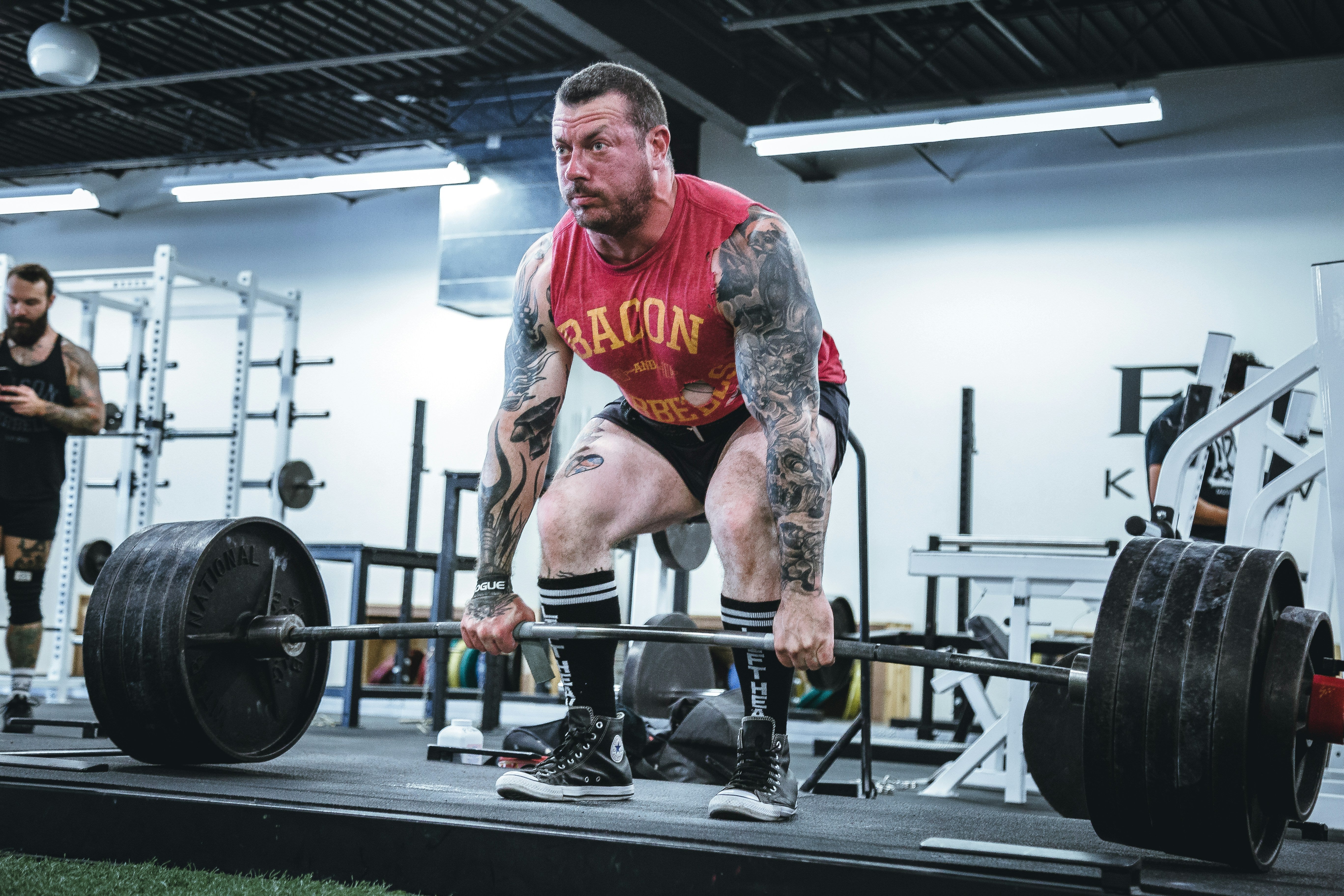
But let’s get back to the topic at hand: optimizing reps. What most people mess up here is they focus exclusively on adding weight to the bar, thinking they can ego-lift their way to better gains. And while, to some extent, that can and generally does happen, if we’re talking about optimization, there’s a better way to go about it. Your muscles don’t know how much weight you’re lifting; they only respond to the tension they experience. If your form is sloppy, you’re just cheating yourself out of gains.

Is Technique Holding You Back?
Let’s be real: your ego might be your biggest enemy in the gym. In the endless pursuit of sticking to progressive overload, holding on for dear life even, we tend to forget to dial in the technique every now and then. Eventually, you end up half-repping most of your sets, and that won’t get you anywhere.
There are a couple of methods to assess your form and make adjustments if necessary:
- Mind-Muscle Connection: Do you feel your target muscles working as you do the exercise? If not, you’re probably doing something wrong. If yes, but it’s not the muscle that you’re targeting, e.g., you feel your anterior delts when doing bicep curls, then something is really wrong.
- Recording Yourself: Not sure if you’re not clowning around rather than lifting? Take out your phone and record your sets! You’d be amazed at how much a simple recording can reveal. Of course, you could also ask someone to spot you and give you feedback, too.
Most of the time, your reps can be considered suboptimal if you feel the exercise more in your joints than your muscles (poor mind-muscle connection), you use momentum to move the weight without control, have a limited range of motion, or can’t feel the muscle contracting as you perform the exercise.
Mythbusting the Best Rep Range for Muscle Growth
Next, let’s quickly debunk the dogmatic approach to rep ranges. You’ve probably heard that:
- 1–5 reps is for strength
- 6–12 reps is for hypertrophy
- 13–30 reps is for endurance and “toning”
Now, I’m sorry if this upsets your worldview, but that’s pretty much false. Bro-science. Doo-doo.
Okay, not entirely false. Research has shown that the first range is better for strength, and the second is better for hypertrophy, but that doesn’t mean that you can’t grow muscle in the 1–5 or 15+ rep range. Conversely, it does not mean that training between 6 and 12 reps nets you no strength gains either. What matters much more than the number of repetitions is training close to failure. This recruits the maximum number of muscle fibers, increasing the growth stimulus and development of muscle memory regardless of weight. Therefore, the smartest approach would be to incorporate all of these ranges into your training.

How to Optimize Reps for Muscle Gains
Alright, now for the practical stuff. Here’s how to optimize reps for muscle gains:
Master the Mind-Muscle Connection
Learn to feel the target muscle work. Get used to the stretch. Contract it deliberately. That matters much more than the weight on the bar.
Control the Eccentric
The lowering portion of any exercise (the eccentric phase) creates much more muscle damage than the concentric, or the squeeze. Lower the weight at a controlled tempo instead of relying entirely on gravity.
Pause at the Peak Contraction
Squeeze the muscle at the most difficult portion, where it contracts the hardest. For example, this applies to squeezing your pecs at the top of a chest fly.
Train Close to Failure
To ensure growth, your workouts need to be challenging. Aim to finish most sets with 1–3 reps left in the tank.
Vary Your Tempo
Try to mix things up periodically and slow down reps with lighter weights to emphasize control. Conversely, on your heavier lifts, try exploding with power and lifting at a higher tempo. Lower the weight before you attempt this to not injure yourself!
Progressive Overload Intelligently
Yes, progressive overload is a must, but not at the expense of technique. Only increase weight when you can perform the current weight with perfect form.
Understand Exercise Selection
Mix in a good selection of compound exercises and isolation exercises. Don’t shy away from machines either—the one advantage they have over free weights is the constant tension throughout the movement.
Bonus: Get Locked In Outside of the Gym
Dial in your nutrition. Prioritize recovery, as sleep and muscle growth go hand in hand. Do some cardio, too—it improves your work capacity during strength training and should not be ignored.
The Takeaway
Remember, there’s no such thing as a “best rep range for muscle growth.” What matters is optimizing your technique for gains, and with the advice we’ve laid out today, you’ll be well on your way to doing just that!
Read also: How to Cut for Summer? – 5 Tips
Why is proper technique crucial for maximizing muscle gains?
Perfecting form ensures the target muscle experiences maximum tension, prevents cheating with other muscle groups, and leads to better growth over time.
Is there a single “best rep range” for building muscle?
No. While 6–12 reps is often linked to hypertrophy, training close to failure in various rep ranges can also stimulate muscle growth effectively.
How does controlling the eccentric phase improve gains?
Slowing down the lowering part of each rep increases muscle damage, prompting stronger recovery and greater muscle growth.
Read more
What happens when mixing pre-workout with alcohol—do the two interact? Essentially, as with anything else, if it sounds like a bad idea, it probably is one. Pre-workout and alcohol just aren’t mean...

What are the best cutting tips for summer to get shredded and drop jaws at the beach this year? Well, if you’re expecting a miracle method that will get you there with your eyes closed in two weeks...